Yet another proof and a delightful one (if any were needed), that
“Music is the purest form of art, and therefore the most direct expression of beauty, with a form and spirit which is one, and simple, and least encumbered with anything extraneous. … No one of its notes is final, yet each reflects the infinite.” – Rabindranath Tagore (Sadhana, the Realisation of Life)
Related
- Live concert by Flute Jayanth’s grandfather T.S. Sankaran >>
- “Sampradaya is like a broad river and the bani is a tributary”: Umayalpuram Sivaraman on his 75 years of performance >>
- Why Carnatic Music Matters More Than Ever >>
Audio tip | JA Jayanth’s grandfather and guru TS Sankaran live at Kalakshetra >>
What is it that makes Tyagaraja unique? What do we know of Tyagaraja?
Musically speaking, South India can be clearly divided into pre-and post-Tyagaraja phases. In this context it would perhaps be more accurate to include Syama Sastri and Muthuswami Dikshitar and attribute the sweeping changes to the entire Trinity. But with Tyagaraja’s output being the highest of the three, the most popular and wide-ranging in themes, he perhaps bore the largest burden in effecting the transformation.
What is it that makes Tyagaraja unique?
We owe much of the joy we experience in Carnatic music to him. His songs stand alone in lending themselves to multiple sangatis, plenty of niraval and swaras.
Source: “What makes Tyagarajs kritis unique? – Madras Heritage and Carnatic Music” by Sriram V. (Date Visited: 13 May 2026) | Learn more: “What do we know of Tyagaraja? – Madras Heritage and Carnatic Music“
Carnatic music as experienced today: its social and political context in a nutshell
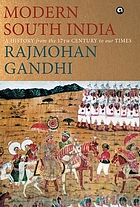
As the nineteenth century closes and in January 1901 a distant Empress dies, the onlooker recognizes an advance across South India in education, a growing print culture, and an emerging middle class of small landholders, doctors, lawyers, college teachers, writers, government employees and merchants.
In the realm of ideas, the onlooker discerns a few currents. One is of nationalism. Another is for reform in traditional customs and exclusions. A third is of linguistic pride. And a fourth pursues equality among castes.
Rajmohan Gandhi in Modern South India: A History from the 17th Century to Our Times , p. 236
This is a Dravidian story, and also more than that. t is a story involving four centuries, the seventeenth, eighteenth, nineteenth and twentieth, yet other periods intrude upon it… [cover notes]
Information about the persons, items or topics
Research & Custom search engines
The Oxford Illustrated Companion to South Indian Classical Music
Learn & practice more
A brief introduction to Carnatic music (with music examples and interactive map)
Bhava and Rasa explained by V. Premalatha
Free “flow” exercises on this website
Introduction (values in the light of modernity)
Video | Keeping tala with hand gestures: Adi (8 beats) & Misra chapu (7 beats)
Why Carnatic Music Matters More Than Ever
Worldcat.org book and journal search (including Open Access)